Eloquii — Designing a flexible ecommerce platform that marketing teams could actually operate
Eloquii's legacy ecommerce platform had become difficult to scale. Campaigns moved slowly, merchandising lacked flexibility, and internal teams relied heavily on design and engineering for even small updates.
I led the redesign of a modular commerce system built to balance creative freedom with operational consistency. The focus was reusable components, responsive behavior, experimentation tooling, and giving internal teams the ability to move quickly without breaking the overall brand experience.
My Role
I owned the redesign from strategy through launch, combining design leadership, customer and business research, and product management. I worked across merchandising, customer experience, customer service, engineering, performance marketing, and brand marketing to set priorities and build alignment. I designed the experience and partnered with engineering through implementation, QA, and release.
Problem
Eloquii's legacy e-commerce platform struggled to capture the brand's core message: that fashion is transformative. User data showed shoppers often scrolled past the homepage slider but rarely engaged further, with significant drop-off past the first image. Beyond the engagement issues, the site was leaving conversion opportunities on the table. The rigid structure made it difficult to surface the right products, respond to shopping behavior, or run the kind of targeted campaigns that drive purchases. Visual hierarchy and content flexibility were limited, and internal teams relied heavily on design and engineering to make even small updates. The result was a slow, inconsistent experience that underrepresented the brand, frustrated internal teams, and wasn't converting the way it should have been.
Process
I joined as Design Director, managing a small design team, with full ownership of the redesign and one directive: make it better. Discovery started with in-person customer interviews and observing how people browsed and shopped firsthand. I interviewed internal teams to figure out what the current site wasn't giving them and what they needed to do their jobs better. From there I built prototypes and ran usability testing to validate direction before committing to anything. I handled feature selection, presented to senior leadership, and got alignment across teams with competing priorities. The focus was on reusable components, mobile parity, and empowering internal teams to experiment safely within consistent boundaries.
Solution
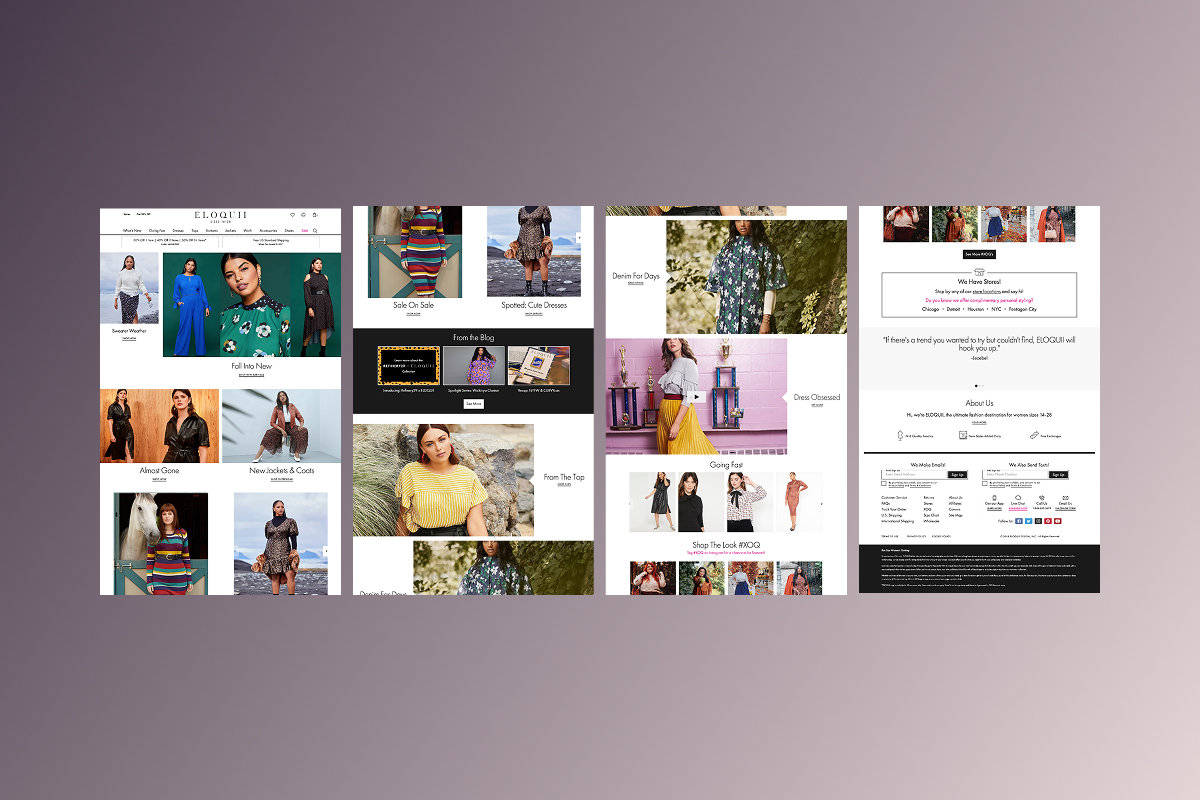
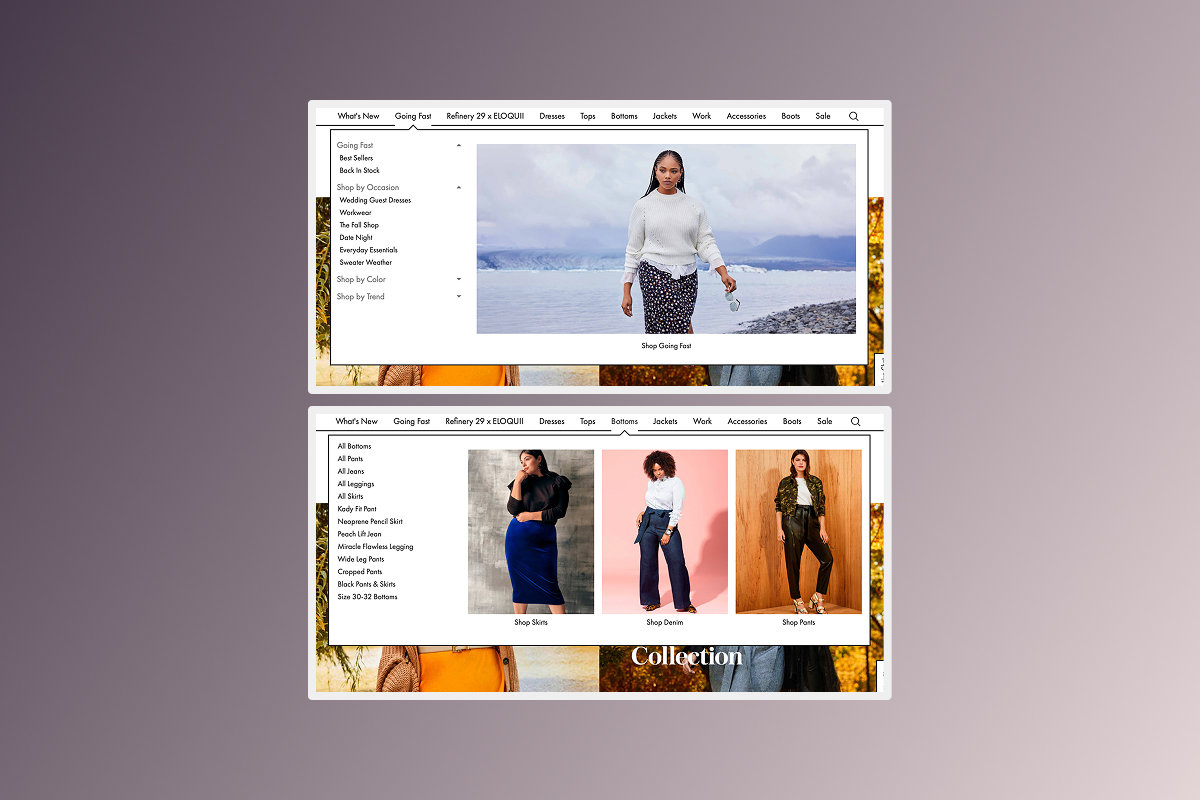
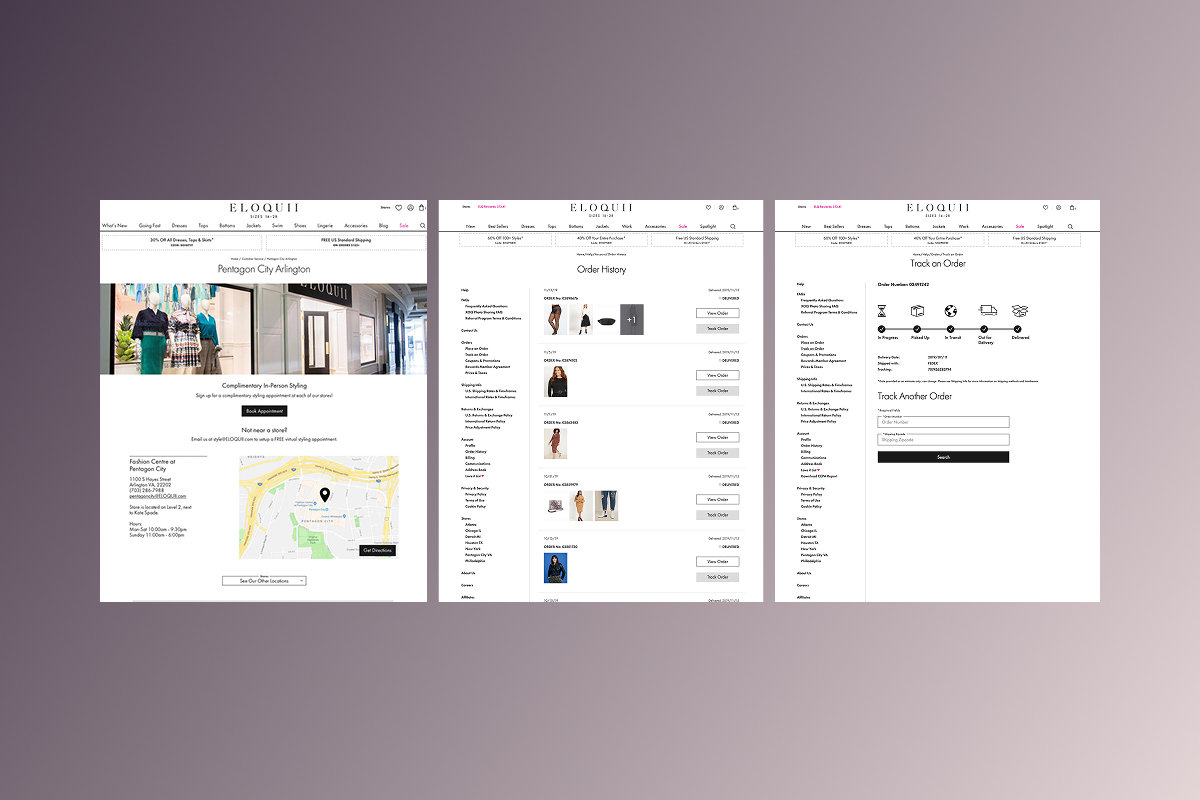
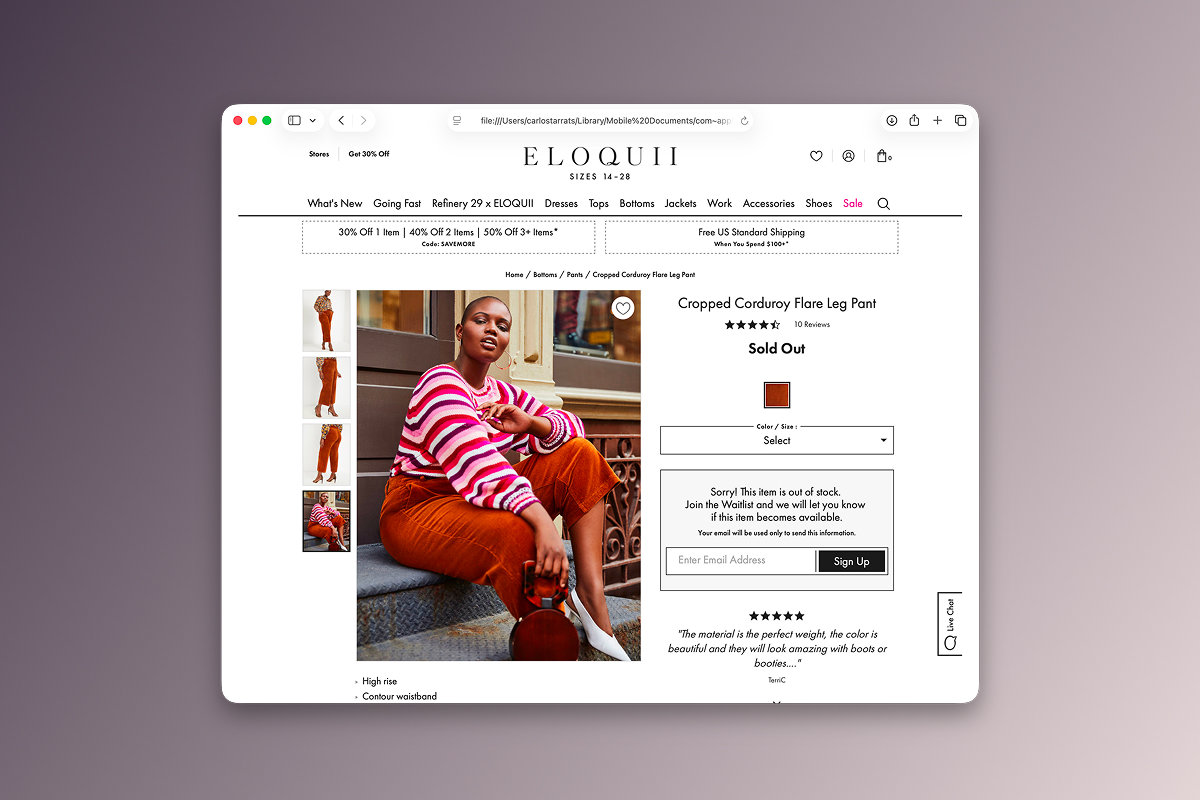
I designed a modular, scalable system that gave Eloquii creative and business flexibility while maintaining visual coherence. The modularity let the business team run tests and respond to sales performance in real time. The homepage architecture used configurable slots where each could host a single horizontal hero image or up to three stacked vertical cards, giving the business flexibility to maximize photo assets and differentiate for campaign days. Messaging and promo slots could change layout and imagery without new code. A sticky promo bar persisted across the site to highlight urgency messaging like free shipping or limited-time offers, with teams selecting 1 to 3 boxes per promo area and mobile automatically defaulting to a single rotating message. Flexible image slots were added to a new dropdown desktop navigation to better illustrate categories and put featured product out front. Responsive defaults meant mobile experiences automatically simplified complex layouts. Typography, grid, and spacing were harmonized across every page template including category pages, PDPs, account pages, and an iOS app. CMS flexibility enabled marketing to swap creative and messaging without involving engineering. What's shown here is a portion of the work. The broader effort included conversion-focused UX optimization across the site, email campaigns, weekly sales flows, and brand marketing touchpoints.
Outcome
The redesign empowered Eloquii's internal teams to iterate faster and more independently. Campaigns launched quicker, visual identity stayed consistent, and the shopping experience became simpler and more cohesive. The work reduced dependency on developers for daily updates, improved homepage engagement and campaign turnaround time, and strengthened alignment between product, marketing, and design teams. The project re-established Eloquii's site as a living reflection of its brand rather than a static storefront. Eloquii was subsequently acquired by Walmart for $100M+.
 Hey, ask away.