Defense Digital Service — Bringing modern product design practices into high-security government systems
Founded in 2015 and dissolved in 2025, the Defense Digital Service brought private-sector engineers, designers, and product teams into the Department of Defense to modernize how military technology was designed, built, and deployed.
I worked across modernization efforts in high-security environments spanning AI, cyber, operational tooling, and digital infrastructure. Most of my work was covered by NDA and cannot be discussed or shown publicly. This page includes only public context and externally published references, while the experience shaped how I think about systems design under real-world constraints: limited connectivity, legacy infrastructure, operational risk, and the complexity of designing for people working in mission-critical environments.
 SpotifyDoing Tech Better in Government with Jennifer Hay, Director, Defense Digital Service (DDS)
 DefenseScoopNew DDS bug bounty to include rapid response capability
 CyberScoopPentagon put microgrid technology to the test at DEF CON
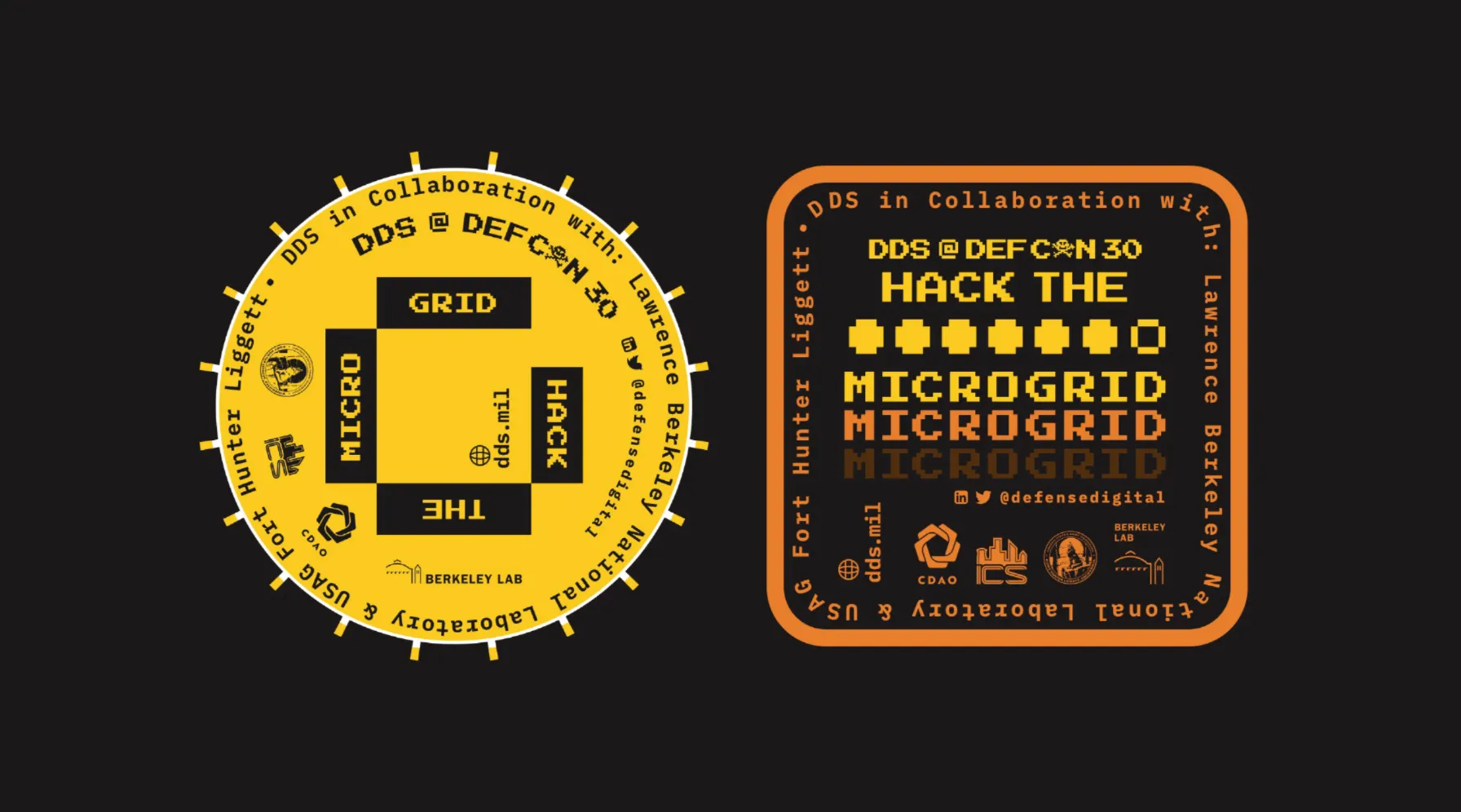 U.S. Army ReserveEstablishing energy microgrid cyber-resilience protocols
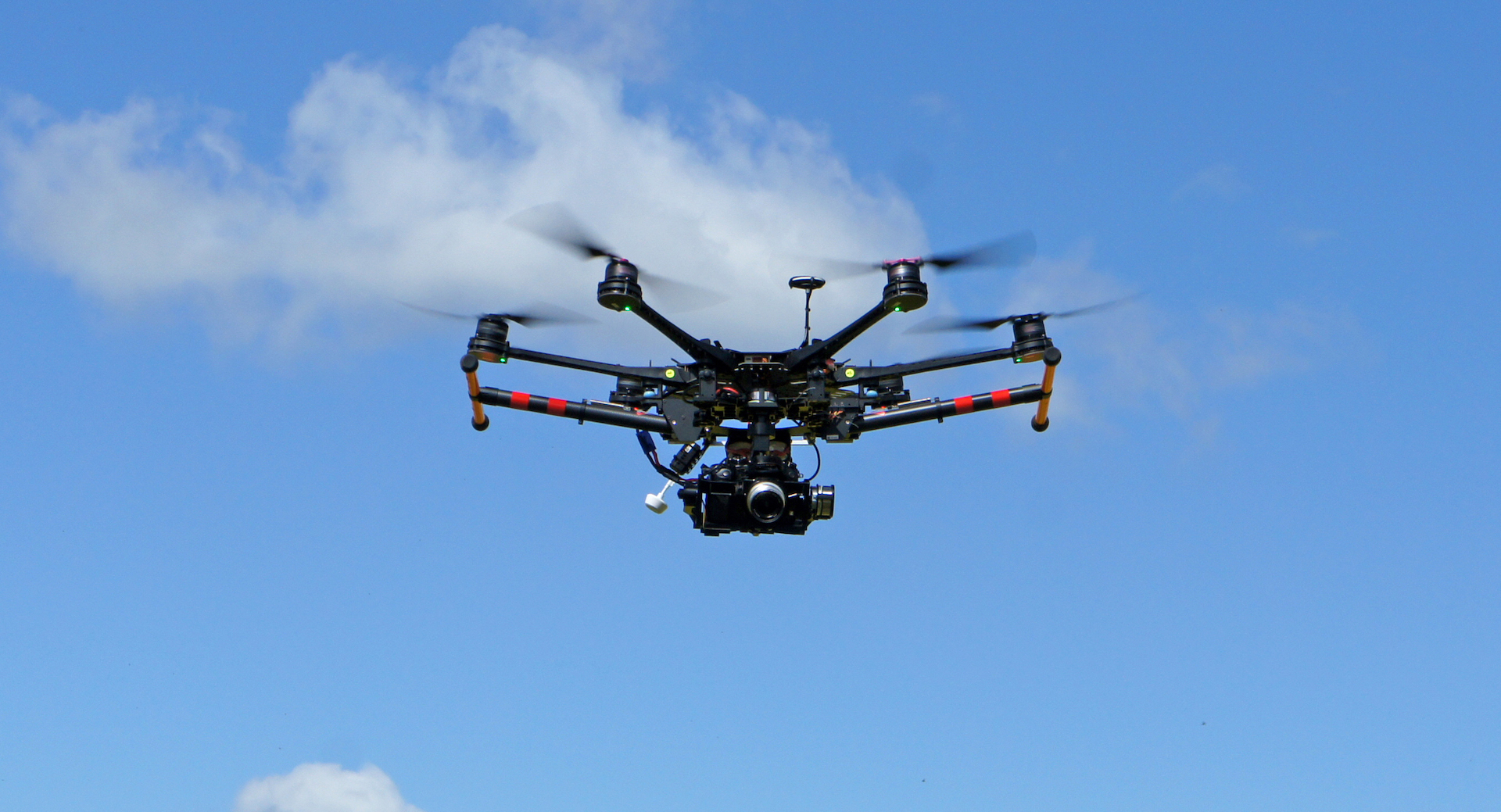 FedScoopDDS to transfer counter-drone capabilities to Air Force
My Role
I was one of several designers at the Defense Digital Service. I led design on my assigned projects, usually as the sole designer embedded with a product manager and engineer. On projects with a second designer, we shared the design work.
How We Worked
DDS operated in product trios (a product manager, a user experience designer and researcher, and an engineer) aligned directly with user and mission needs. This model, embedded within a fully agile, human-centered process, empowered teams to move quickly while solving problems rather than just delivering features. The team was comprised mostly of civilians from the private sector serving two or four year limited terms, ensuring a constant influx of fresh ideas and a sense of urgency to maximize contributions to the DoD.
Types of Work
DDS work fell into three categories. Rapid capabilities were fast-response engagements where the team jumped in to solve urgent technical problems: supporting counter-unmanned aerial system efforts, running hackathons with Army units to improve force protection, and developing tools like Move.mil that saved the military thousands of hours annually. The team also ran experimental projects like Combee, a proof of concept that used large language models as a plain-language interface for controlling physical systems, demonstrating what was possible at the tactical edge. Cybersecurity efforts included Hack the Pentagon, the federal government's first bug bounty program, along with DNS security services and protection of critical infrastructure control systems. Technical assessments paired human-centered research with hands-on technical evaluation to help DoD organizations identify and solve the right problems.
AI Readiness
DDS led efforts to accelerate the DoD's adoption of artificial intelligence across five dimensions: opportunity discovery to identify high-impact use cases, data management to ensure quality and interoperability across systems, IT environment modernization for secure and scalable deployment, risk and governance frameworks for responsible AI, and adoption programs to train and empower DoD personnel. The team developed Axon, the DoD's first large-language model operations framework, and deployed the first LLM to a DoD High Performance Computing Center.
Design Challenges
The design challenges at DDS were distinct from the private sector. Users operated in environments with strict security constraints, limited connectivity, and legacy systems that couldn't simply be replaced. Success meant going where the work is, showing up to experience problems firsthand, understanding deeply entrenched workflows, and delivering solutions that worked within those constraints rather than around them. Every design decision had to balance usability with operational security requirements. DDS demonstrated that modern product design practices could transform even the most complex government systems by focusing on the people who actually use the technology.
Closure
DDS was dissolved in early 2025 as part of restructuring under the Department of Government Efficiency (DOGE). The unit's mission and the work it accomplished over nearly a decade remain a testament to what's possible when you bring private-sector talent and modern practices into government.
 Hey, ask away.